
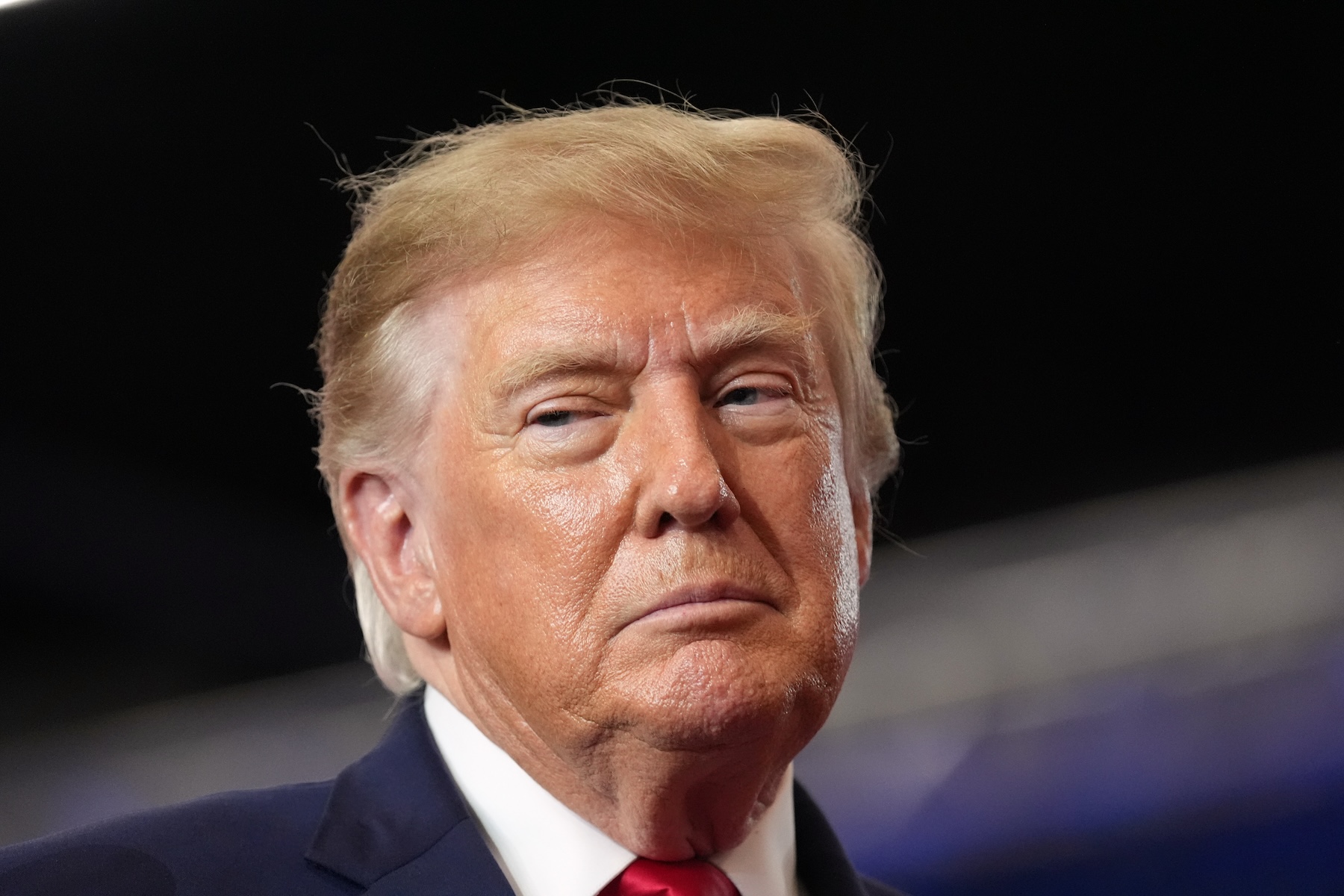
Democrats, election officials and voting rights groups have long wondered whether President Donald Trump, upon his return to the Oval Office, would again attempt to overturn an election when his party is trailing.
It’s no longer hypothetical.
Late last week, the president directed his Department of Justice to preemptively contest a potential Republican loss in the U.S. Senate race in Alaska. The department is demanding a court hold up certification of a possible Democratic win until it’s determined whether voters were confused by having two candidates with the same name on the ballot.
Trump followed that by calling for the prosecution of Democratic candidate Mary Peltola, a former congresswoman, based on a New York Times report that her campaign helped recruit someone named Dan Sullivan to siphon away votes from the Republican incumbent, also named Dan Sullivan. The governor has ordered an investigation.
Academics believe the lawsuit is the first time since the Civil Rights era that the federal government has sued to halt certification of an election, a duty the Constitution places in the hands of states.
Trump, for years, has claimed elections are rigged when he or his party loses, and this time is no exception. He has used his midterm rallies to say Democrats cheat, criticize election officials by name and call the ranked choice voting system in Alaska, which might hold the key to Senate control, a scam.
But the certification lawsuit elevates Trump’s crusade beyond mere rhetoric, indicating that he is preparing to use the power of the presidency to try to reverse a possible loss as his party struggles to hold its control of Congress in Tuesday’s elections.
Earlier this week, the president also announced a $1 million bounty for anyone who provides proof of prior or current voter fraud in the country. It wasn’t clear whether or how he planned to follow through.
“For at least the last year and a half, they’ve been laying that groundwork,” said Theresa Lee, a senior attorney with the ACLU. “We’ve been preparing for just as long, if not longer.”
Trump told reporters this week that he would accept the election results, but with his typical caveat: “If they’re honest elections,” he said.
That follows a pattern. Trump has preemptively claimed that upcoming elections will be rigged and labeled elections he’s lost as stolen. It started with the 2016 Republican Iowa caucuses, when he came in second to Texas Sen. Ted Cruz.
“Ted Cruz didn’t win Iowa,” Trump said at the time. “He stole it.”
Democrats and other groups that oppose Trump have been concerned that his words would turn into directives to have his administration interfere in the midterms. They have been running exercises for months and have lawsuits pre-written. They also plan to have tens of thousands of people monitoring the polls on Election Day.
So far, early voting has been quiet, with about 35 million people already casting ballots without any notable disruption.
In that respect, this year’s election so far resembles 2025’s off-year elections in New Jersey, Virginia and a handful of other states. Democrats braced for possible Trump action then, but the election proceeded with no major issues. But the Justice Department’s more aggressive actions this month already make 2026 different from any election in recent memory.
It has sued California to block it from counting ballots after it alleged the state had 20,000 noncitizens on its rolls and made a similar demand of Washington related to about 400 voters in that state. Both states said the demands came too close to the election to fulfill, and a federal judge Wednesday rejected the federal government’s California demands.


